What will humanity leave behind? And what strange, wonderful or downright terrifying things have previous civilisations left for us?
Get ready for a journey into the unexpected. A Frightful Legacy is the largest solo exhibition to date by Latvian artist and stage designer Miķelis Fišers, bringing together works from across his career alongside brand-new creations. Part retrospective, part vision of the future, it reveals just how uncannily some of his earlier artistic predictions resonate today.
Since the 1990s, Fišers has explored parallel worlds, historical mysteries and the darker corners of human civilisation, mixing sharp irony with a healthy dose of surrealism. His imaginary universes weave together myths, politics, ideologies and everyday reality, asking some rather big questions about where humanity is heading – and whether we are paying attention.
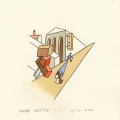
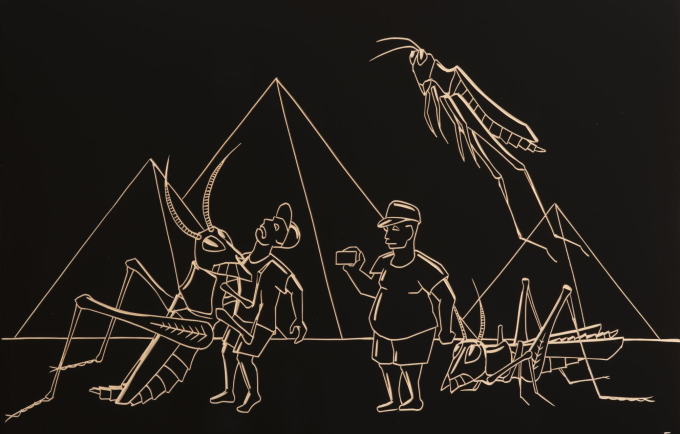
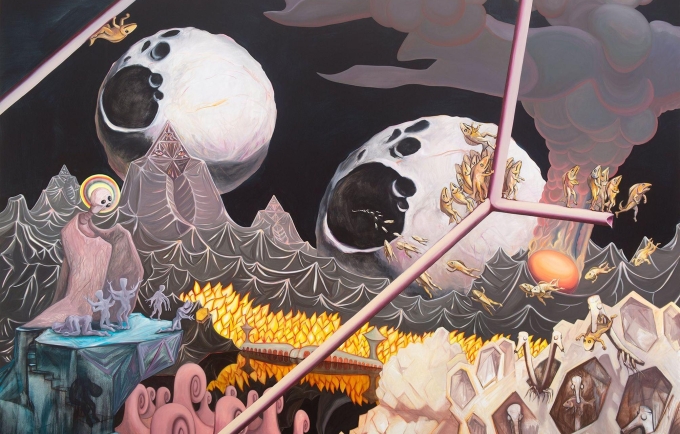
The exhibition unfolds across several interconnected spaces. Early works appear like mysterious archaeological artefacts, while the Great Hall showcases his monumental paintings and mind-bending alternative worlds. These are places where forces beyond human control are at work, leaving visitors somewhere between curious observers and unlikely participants.
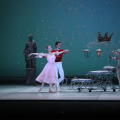
But Fišers doesn't stop at the canvas. His surreal visions spill into sculptures and physical installations created especially for the exhibition. The granite installation POP UP Artefacts explores the endurance of art and the fragility of what we leave behind.
At the heart of it all are two deceptively simple questions: What will we leave for the future? And what have we inherited from the civilisations that came before us?
The exhibition returns to these ideas in its final section, featuring a series of woodcuts and a sound installation involving megaliths.
Beyond its otherworldly imagery, A Frightful Legacy also raises an important question about our own cultural heritage: how do we preserve contemporary art for generations to come? Familiar works meet brand-new creations, opening up a conversation about accessibility, artistic legacy and our shared responsibility to protect the culture being made today.
A public programme of events, educational activities and discussions will accompany the exhibition, inviting visitors to look beyond the spectacle and explore the ideas behind it.
Meet the artist
Born in 1970, Miķelis Fišers is one of Latvia's most distinctive contemporary artists and stage designers. With more than 20 solo exhibitions in Latvia, the UK and elsewhere in Europe, he has made quite a mark on the art world.
He received the prestigious Purvītis Prize in 2015 for his exhibition Injustice and represented Latvia at the 57th Venice Biennale in 2017 with What Can Go Wrong. He has also created stage designs for several Latvian theatre productions.
Fišers is fascinated by the fragility of reality and the limits of human perception. His work uses apocalyptic imagery, intergalactic visions and alternative dimensions to examine the unsettling realities of contemporary civilisation. He even has a name for his particular field of exploration: postmodern neo-apocalyptology.
Expect visions, nightmares, parallel universes and plenty of food for thought. Reality, after all, may be stranger than fiction – especially in the hands of Miķelis Fišers.